


A Centre of the Academy of Agricultural Sciences has opened in Turkistan, El.kz reports, citing the regional akimat (El.kz).
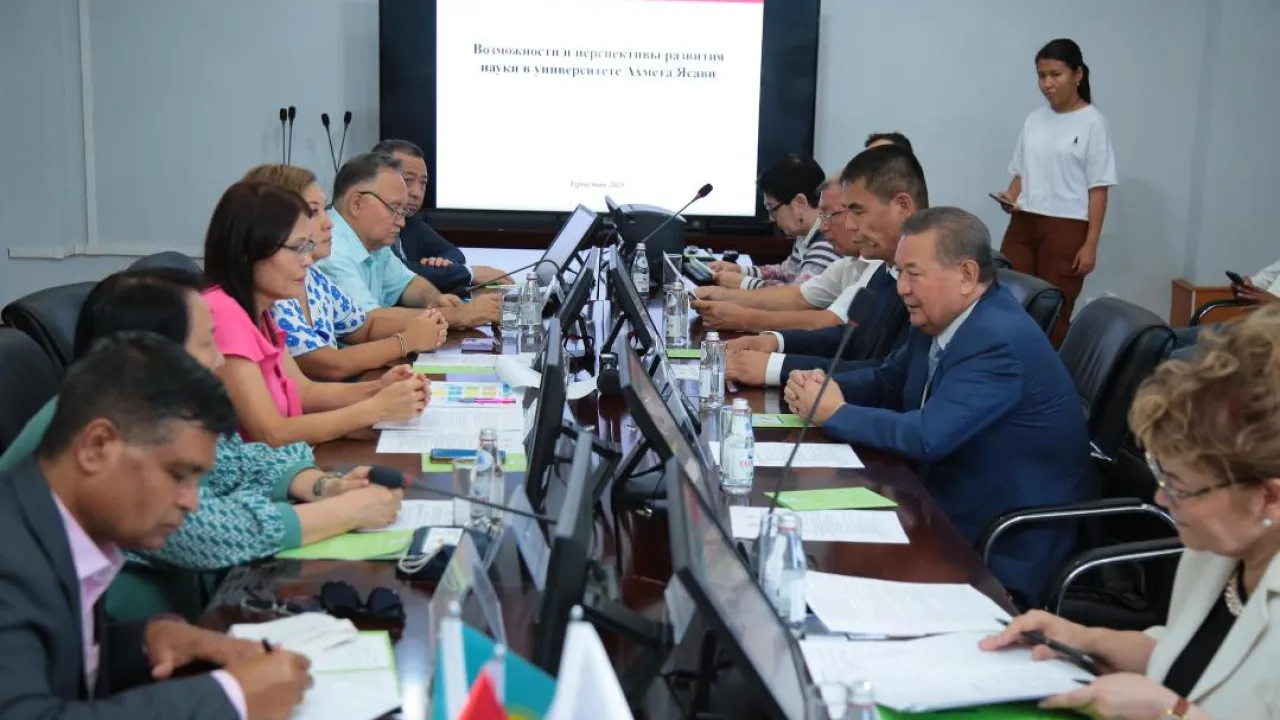
As part of an international scientific and practical conference on improving the environment and developing agriculture, the Yasawi Knowledge Dissemination Centre of the Academy of Agricultural Sciences of Kazakhstan opened in Turkistan. The event marked the fifth anniversary of the region and was attended by the deputy akim of the region and well-known scientists from Kyrgyzstan, Uzbekistan, India and Pakistan.
The main goal of the new Centre is the timely dissemination of information in the agricultural sector and of scientific discoveries, taking into account the best practices of leading countries. Academician of NAS RK and President of the Academy of Agricultural Sciences Tlektes Espolov stressed the importance of uniting scientific potential and introducing domestic innovations to improve the efficiency of agricultural production and develop the business sector. A memorandum of cooperation was signed between the Academy and the Khoja Akhmet Yassawi International Kazakh-Turkish University.
Conference participants also visited Turkistan’s green spaces and praised the greening work carried out in the region’s arid climate, which was greatly helped by cooperation with Kazakh agricultural universities.
A meeting of regional akimat specialists, ecologists and international experts was also held in Turkistan to discuss expanding and improving the region’s green areas. The focus was on the region’s soil and climate conditions, tree planting, new technologies, and the development of forest seed areas and seed production.
Experts from Uzbekistan, Kyrgyzstan, India and Pakistan, as well as representatives of universities and research institutes, shared their experience of planting trees in harsh climates and of methods for increasing the fertility of irrigated soils.
The event became an important platform for discussion and exchange of experience in greening and agriculture. The resolution adopted will be an important document defining further steps to improve the environment and create green zones in the region.